

How Much Does Stick Pack Manufacturing Cost?

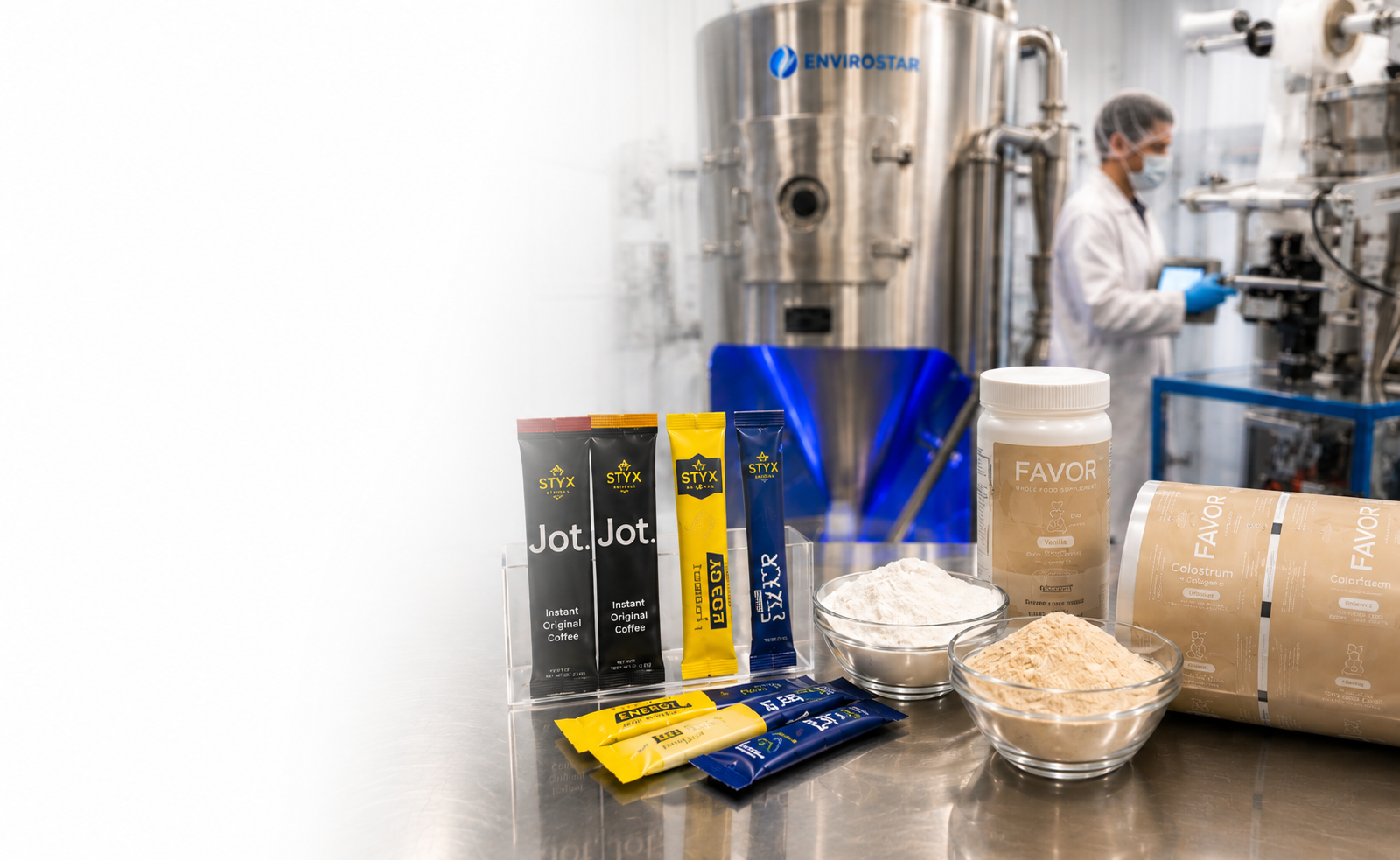
The cost of stick pack manufacturing can vary substantially depending on the product formula, order quantity, packaging film, serving size, testing requirements and secondary packaging.
For a new brand, the most important thing to understand is that stick pack pricing is not based only on the cost of filling each individual package. A complete project may also include formulation work, ingredient sourcing, blending, printed film, machine setup, quality testing, cartons and freight.
PowderFill helps brands evaluate these costs before production so they can develop a realistic project budget and avoid expensive surprises.
What determines stick pack manufacturing cost?
The primary factors affecting cost include:
- Number of stick packs ordered
- Amount of powder in each stick
- Formula complexity
- Ingredient costs
- Printed or unprinted packaging film
- Number of flavors or product variations
- Required testing
- Secondary packaging
- Setup and changeover requirements
- Shipping and storage
Two projects with the same number of stick packs can have very different total costs because the formulas and packaging specifications may be completely different.
Want an initial project estimate?
Use our Stick Pack Project Budget Calculator to see how volume, formula development, ingredients, film and secondary packaging may affect your budget.
1. Order quantity
Order quantity is one of the biggest factors affecting the cost per stick pack.
Every manufacturing run requires preparation, including:
- Scheduling
- Material staging
- Equipment setup
- Film installation
- Machine adjustments
- In-process quality checks
- Cleaning
- Production documentation
These activities are required whether a project includes several thousand sticks or several hundred thousand sticks.
As the production quantity increases, setup expenses are spread across more units. This generally reduces the manufacturing cost per stick.
Smaller pilot runs may have a higher per-unit cost, but they can still be valuable because they allow a brand to test its product before committing to a large commercial order.
2. Stick pack fill weight
The amount of powder placed into each stick affects both ingredient cost and packaging performance.
A lightweight product containing only a few grams may cost considerably less per unit than a large hydration, protein or meal-replacement serving.
Fill weight also influences:
- Stick width and length
- Film usage
- Machine speed
- Filling accuracy
- Powder-flow requirements
- Carton size
- Shipping weight
The physical volume of the powder may be just as important as its weight. A low-density powder can require a much larger package than a dense powder of the same weight.
3. Ingredient costs
Ingredients are often one of the largest components of the project budget.
Common hydration ingredients such as salts, acids, sweeteners and flavors may be relatively economical. Specialized botanical extracts, proteins, vitamins, minerals or branded ingredients can be significantly more expensive.
Ingredient cost can also be affected by:
- Minimum purchase quantities
- Supplier availability
- Required certifications
- Country of origin
- Potency
- Testing requirements
- Organic or non-GMO specifications
- Allergen controls
Brands should evaluate both the cost per kilogram and the amount used in each serving.
A seemingly expensive ingredient may have only a small effect on the cost per stick if it is used at a low dosage. Conversely, a moderately priced ingredient can become a major expense when it represents most of the formula.
4. Formula development and flavor work
A project with a completed, production-ready formula may require less development work than a project that begins with only a product concept.
Formulation services may include:
- Ingredient selection
- Serving-size development
- Electrolyte balancing
- Sweetener selection
- Flavor development
- Color adjustment
- Solubility improvement
- Powder-flow evaluation
- Prototype preparation
- Formula revisions
Hydration and supplement powders often require several development rounds before the flavor, sweetness, acidity and mouthfeel are acceptable.
The formula also needs to work in production. A product that tastes good in a laboratory sample may still need adjustments to blend consistently or flow through stick pack equipment.
PowderFill provides product-development and formulation support for brands that need help moving from concept to a manufacturable formula.
5. Packaging film
Stick packs can be produced using stock film or custom-printed film.
Stock film
Stock film can be useful for:
- Pilot production
- Product testing
- Sampling
- Early-stage launches
- Shorter timelines
Labels or outer cartons may be used to identify the product when the individual sticks are not custom printed.
Custom-printed film
Custom film provides a finished branded appearance but may require:
- Artwork preparation
- Printing plates or digital setup
- Supplier minimums
- Longer lead times
- Upfront film purchases
The number of colors, film structure, finish and barrier requirements can all affect the price.
Powders that are sensitive to moisture, oxygen or light may require higher-barrier packaging. Selecting the correct film is important because packaging failure can cause clumping, flavor deterioration, discoloration or reduced shelf life.
6. Number of flavors and variations
Each flavor, formula or package design may require a separate production setup.
For example, a hydration brand launching four flavors may need:
- Four ingredient sets
- Four blends
- Four film designs
- Multiple equipment changeovers
- Separate production records
- Additional cleaning
- Separate finished-goods inventory
Producing several variations at once can improve the overall product line, but it can also increase initial project cost.
New brands can reduce complexity by launching with one or two core flavors before expanding.
7. Product testing
Testing requirements depend on the product, ingredients, claims, sales channels and customer expectations.
Testing may include:
- Microbiological analysis
- Heavy-metal testing
- Nutritional analysis
- Ingredient identity testing
- Finished-product verification
- Water-activity testing
- Stability or shelf-life evaluation
Testing should be planned early because it affects both project cost and timeline.
Required testing may also differ depending on whether the product is marketed as a conventional food, dietary supplement or another regulated product category.
8. Secondary packaging
Individual sticks may be packed into:
- Folding cartons
- Pouches
- Display boxes
- Sample kits
- Bulk cases
- Variety packs
- Subscription boxes
Secondary packaging can add significant cost, particularly when cartons require custom printing, inserts, dividers or manual assembly.
Brands should determine:
- Number of sticks per carton
- Carton dimensions
- Retail display requirements
- Shipping configuration
- Whether sticks will be sold individually
- Whether multiple flavors will be combined
A simple bulk case generally costs less than a fully printed retail carton.
9. Freight, storage and fulfillment
Manufacturing cost does not always include the cost of moving and storing the finished product.
Additional expenses may include:
- Inbound ingredient freight
- Packaging-material freight
- Finished-product shipping
- Pallets
- Warehousing
- Order fulfillment
- Retail compliance labeling
- Third-party logistics services
Shipping costs are influenced by product weight, carton dimensions, pallet configuration and destination.
A realistic project budget should include the cost of getting the finished product from the manufacturing facility to the customer or fulfillment provider.
Why small runs cost more per stick
Smaller production runs usually have a higher per-unit cost because they still require many of the same setup and quality procedures as larger runs.
However, beginning with a smaller run can reduce overall business risk.
A pilot or initial production run can help a brand evaluate:
- Customer response
- Flavor acceptance
- Packaging appearance
- Price positioning
- Online conversion
- Retail interest
- Repeat purchase rate
Ordering a very large quantity before validating the product may produce a lower manufacturing cost per stick, but it can leave the brand with excess inventory if the product needs to be changed.
The lowest cost per unit is not always the lowest-risk business decision.
How brands can reduce stick pack costs
Brands can often manage costs by simplifying the first production run.
Helpful strategies include:
Begin with fewer flavors
Launching one or two flavors reduces formulation work, packaging variations, setups and inventory complexity.
Use a standard stick size
A standard package configuration may be easier and more economical than a custom size.
Finalize the formula before ordering film
Formula changes can affect serving size, stick dimensions and label information. Finalizing the product first reduces the risk of unusable packaging.
Confirm ingredient availability early
Long lead-time or difficult-to-source ingredients can delay the project and increase costs.
Use pilot production strategically
A pilot run can identify blending, flow, filling or sealing problems before a larger order is placed.
Provide complete project information
A manufacturer can prepare a more accurate estimate when the brand provides:
- Formula or ingredient list
- Serving size
- Estimated order quantity
- Number of flavors
- Packaging preference
- Testing requirements
- Desired launch date
- Secondary packaging needs
Incomplete specifications can result in estimates that change significantly as the project develops.
What information is needed for a stick pack quote?
To begin evaluating a project, provide as much of the following information as possible:
- Product type
- Formula status
- Ingredients
- Amount per serving
- Estimated powder weight per stick
- Number of flavors
- Initial production quantity
- Expected annual volume
- Printed or stock film preference
- Number of sticks per carton
- Required certifications
- Testing expectations
- Target completion date
You do not need to have every detail finalized before contacting PowderFill. Early discussions can help identify decisions that need to be made before pricing is completed.
Can PowderFill help with more than packaging?
Yes. PowderFill supports projects from early development through finished stick pack production.
Services may include:
- Product development
- Custom powder formulation
- Flavor development
- Ingredient sourcing
- Powder blending
- Pilot production
- Stick pack filling
- Packaging coordination
- Secondary packaging
- Commercial scale-up
This integrated approach can simplify the development process because fewer activities need to be coordinated across separate suppliers.
Frequently asked questions
Is there a minimum order for stick pack manufacturing?
Minimums depend on the formula, packaging method, film requirements and production setup. PowderFill works with both developing and established brands and can evaluate pilot and commercial-production options.
Are printed stick packs more expensive?
Custom-printed film usually requires additional setup, minimum purchases and lead time compared with stock film. However, printed film provides a finished branded presentation and may eliminate the need for separate labels.
Does the price include ingredients?
That depends on how the project is structured. PowderFill can evaluate projects using customer-supplied ingredients or provide ingredient-sourcing support.
Does every flavor require a separate setup?
Typically, each flavor or formula requires separate blending, production records and equipment setup. Multiple flavors may therefore increase the overall project cost.
Can PowderFill help estimate the total project budget?
Yes. PowderFill can review the formula, serving size, quantity, packaging and secondary-packaging requirements to develop a project estimate.
How long does a stick pack project take?
The timeline depends on formula readiness, ingredient availability, printed-film lead time, testing and production scheduling. Projects using an established formula and readily available materials can generally move faster than projects requiring full formulation development.
Start planning your stick pack project
A reliable stick pack manufacturing estimate requires more than a target unit count. Formula, ingredients, fill weight, film, testing and secondary packaging all affect the final project cost.
PowderFill works with hydration, wellness, supplement and functional-powder brands from product development through commercial production.
Use the Project Budget Calculator to develop an initial budget range, or request a project quote to discuss your product with the PowderFill team.